Challenge
Amazon customers suffered from decision fatigue navigating a static list of links within a catalog of hundreds of millions of items, leading to high abandonment.
Strategy
I designed a modular framework to inject dynamic product recommendations directly into search results to reduce cognitive load and increase purchase confidence.
Results
Generated over $1 billion in incremental annual revenue, secured two US patents, and scaled the new shopping pattern to ~80% of all Amazon searches.
Challenge
The paradox of choice
Over time one of Amazon's greatest strengths, it's seemingly endless catalog of hundreds of millions of items, had become a critical liability. A mixture of quantitative and qualitative research revealed that customers were suffering from decision fatigue. While the search engine successfully surfaced relevant products, the sheer volume of results was paralyzing users, making it difficult to confidently choose the right item and leading to high abandonment rates.
"There are 50 pages of results for 'white running socks' and they all look identical. I don't want to read a thousand reviews, I just want to know which one is the 'good' one so I can get on with my day."
"I literally spent 45 minutes comparing specs on $12 HDMI cables. At a certain point, I just closed the tab because it felt like homework. I shouldn't have to work this hard to spend ten dollars."
"Every time I click on a product, I see five other items that look slightly better. It makes me feel like whatever I pick is going to be the wrong choice, so I end up buying nothing."
Strategy
Intelligent, guided product recommendations
To address the paradox of choice, I hypothesized that injecting trustworthy, intelligent product recommendations directly into the search results page would reduce cognitive load for customers trying to make a decision, and ultimately increase conversion. I led an ambitious strategy designed to bridge the gap between massive catalog data and human-centric decision making.
The hybrid recommendation engine
Data alone doesn't build trust, but context does. I led the UX logic for a dual-layered recommendation engine.
Curated expert recommendations integrating authoritative, third-party content from trusted sources like The Wirecutter, America’s Test Kitchen, and Consumer Reports. This injected objective expert voices into the search feed, providing the social proof necessary to help shoppers make confident purchase decisions.
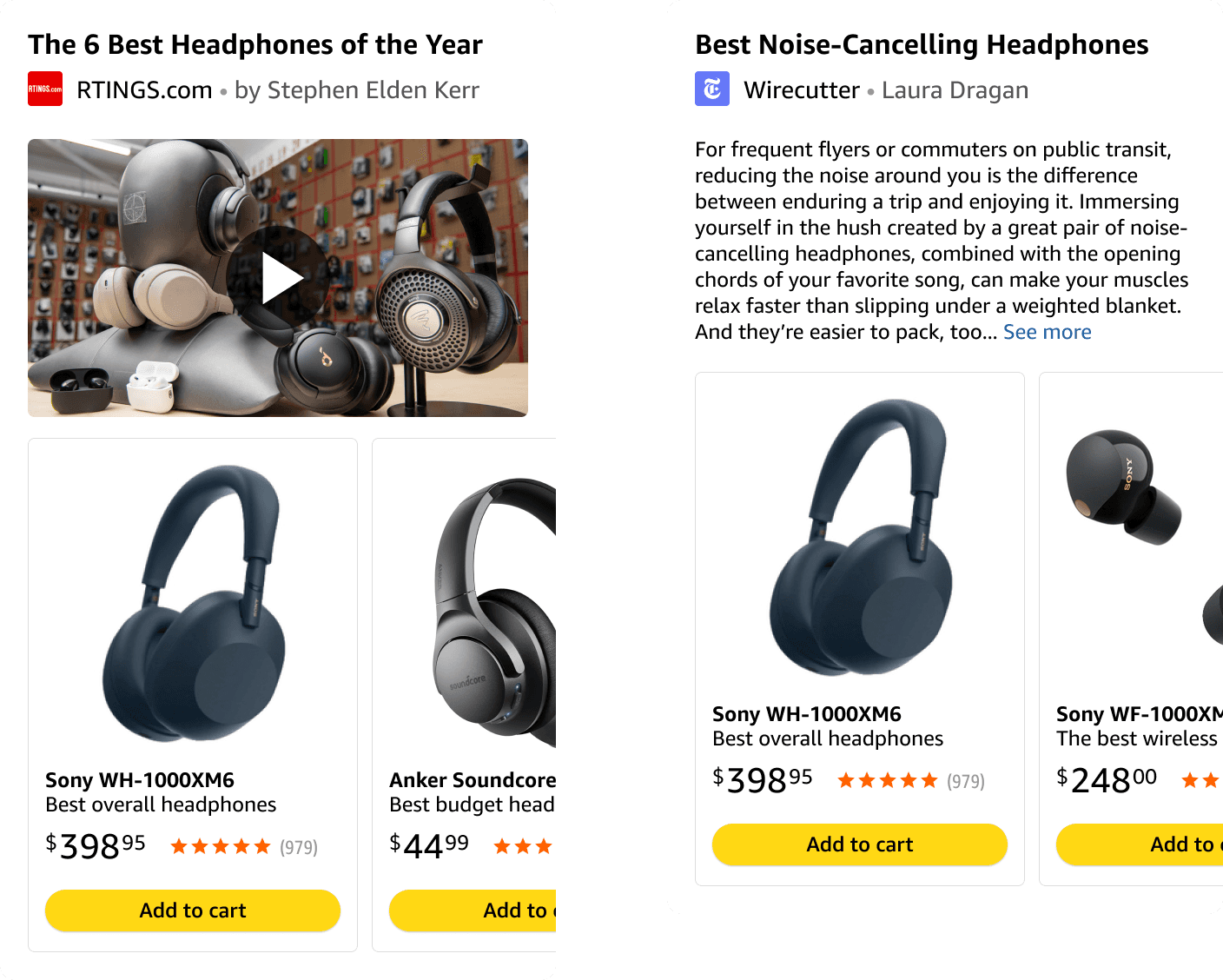
Example curated expert recommendations
Algorithmic recommendations using dynamic datasets like trending products, best sellers, and "customers also viewed" to ensure real-time relevance and an ability to cover a wide range of use cases.
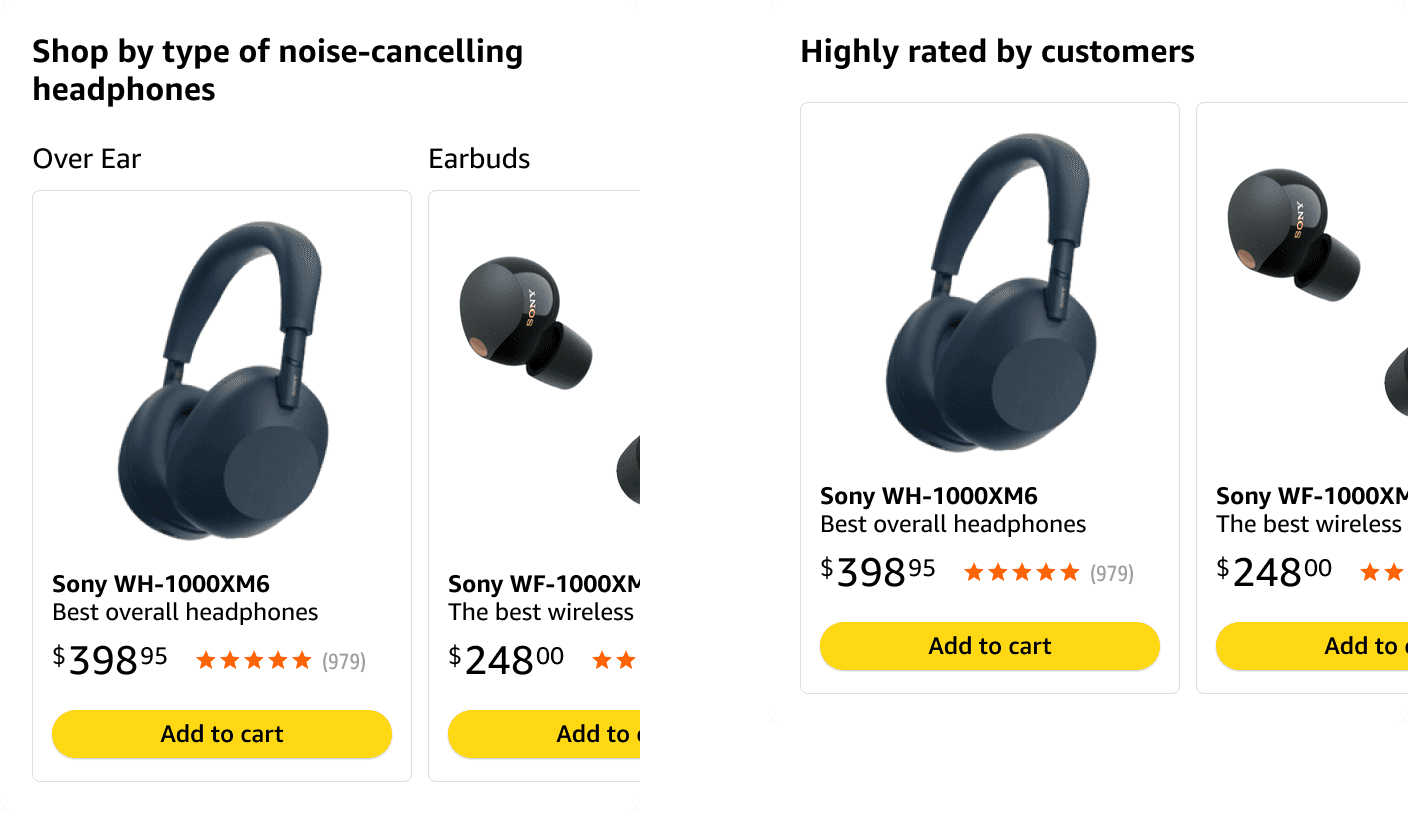
Example algorithmic recommendations
Scalable, modular component system
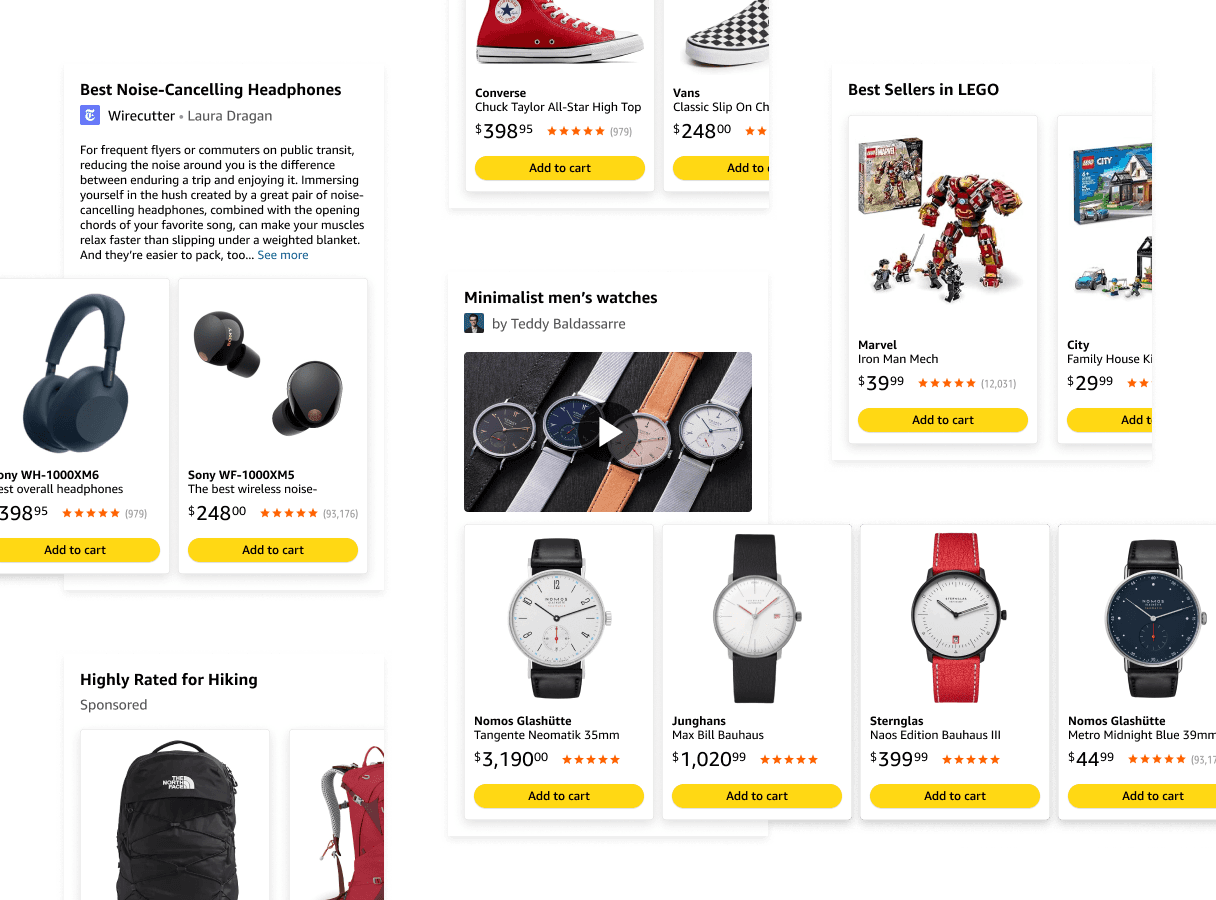
In order to present diverse data sources in a cohesive experience, I designed a modular atomic framework that allowed product recommendations to be seamlessly rendered directly within the search results.
I developed a system of structured, flexible template components that could adapt to the associated content—ranging from the simplest product carousels to rich-media widgets featuring video, editorial photography, and long form articles.
The system ensured dynamic contextuality, whether a customer was looking for a $10 spatula or a $2,000 camera, the content displayed would map to the category's specific decision-making needs.
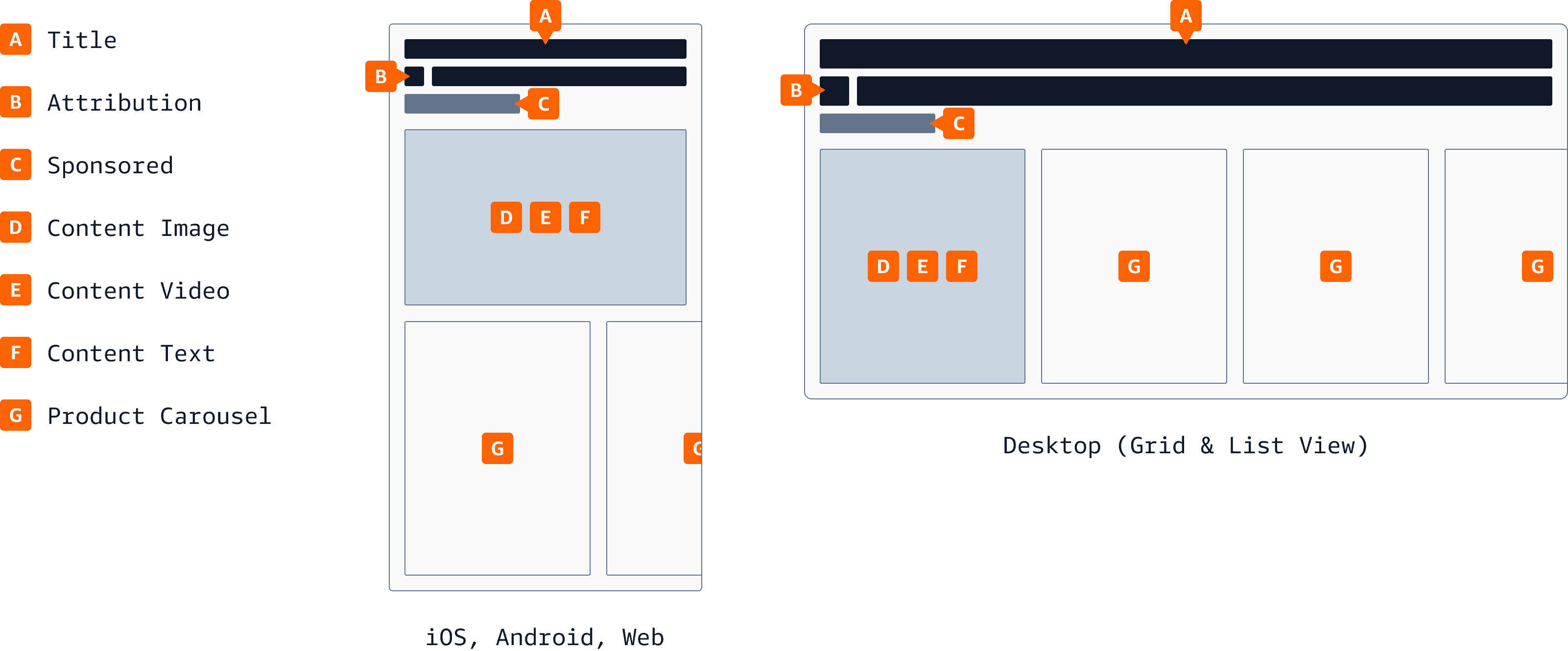
Example modular template enabling dynamic content display
Dynamic, floating placement
With the framework in place, I need to determine the optimal placement for where these widgets would live within the search results page.
Instead of a one-size-fits-all approach, I tested a floating "king of the hill" placement model. This essentially treated the page real estate as a competitive marketplace. Rather than fixing the widget somewhere at the top or bottom, I employed a logic that allowed the component to "float" dynamically based on real-time user engagement signals.
The system continuously analyzed the performance of the widget against adjacent organic search results. If the widget provided higher utility (clicks, dwell time, conversions, etc.) than the surrounding products, it earned a higher rank and floated up the page.
This ensured the experience was truly adaptive. For a broad research query (e.g. "best laptops"), the expert guide might rise to the top, whereas for a detailed search for a specific ASIN it would disappear completely to avoid obstructing the path to purchase. By letting user behavior dictate the architecture, I was able to ensure that the product recommendations were always present exactly where they added the most value, and never felt like an intrusion.

Widget floats up and down the page based on user engagement signals
Hypothesis-driven validation
Once I had everything set, I implemented a rigorous testing and validation process. Nearly every aspect of the design was treated as a testable hypothesis. From the content itself down to the pixel size of the price, nothing went unscrutinized.
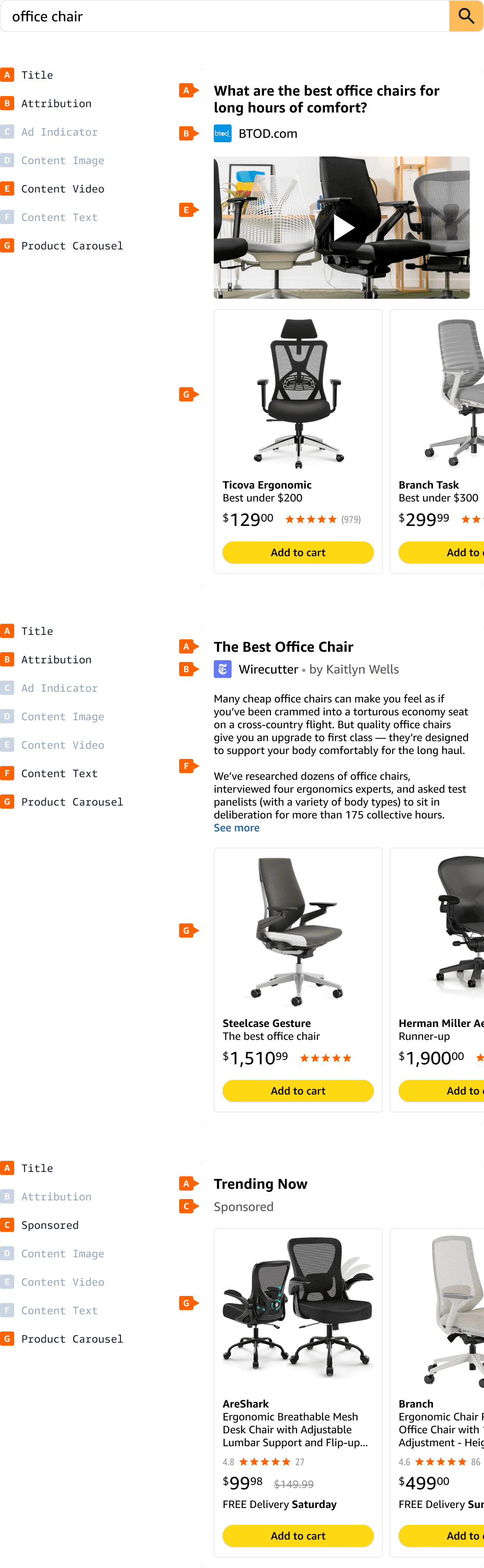
A variety of potential display options for the same customer query can be tested against each other in order to determine the optimal content
Results
Lasting impact
This work fundamentally changed the Amazon search interface, and delivered significant business results. My hypothesis was proven right, and nearly a decade later you can still find these dynamic product recommendation components on most Amazon search results pages to this day.
REVENUE
$1B
Led to more than $1 billion in incremental annual revenue growth based on statistically significant measurement
Scale
~80%
These components are now a permanent fixture, appearing in ~80% of all Amazon search results pages across web, iOS, and Android
Patents
2x
My work on these e-commerce search systems resulted in the granting of two US Patents for novel designs